
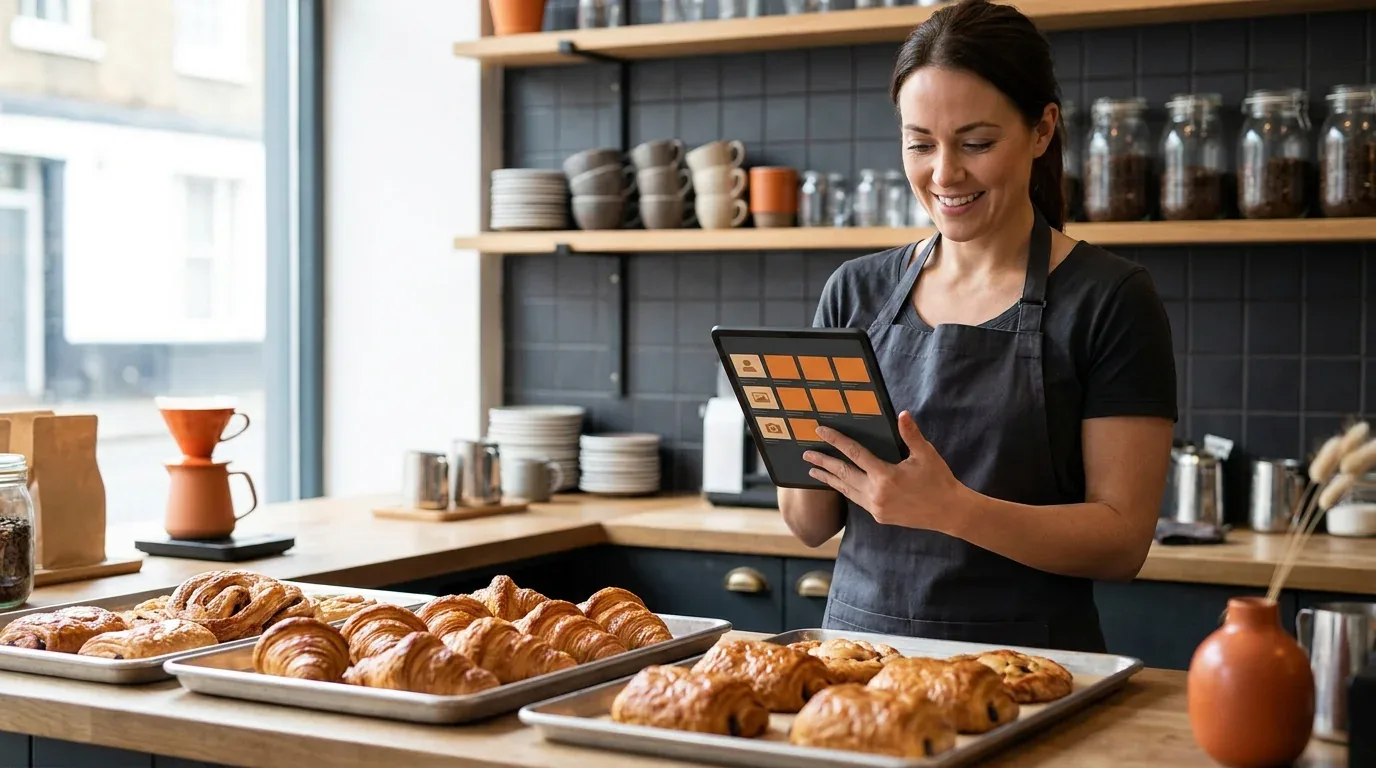
It is Friday lunchtime. The café is full, the phone is ringing, three messages are waiting on Instagram and the rota for next week is still half-finished. Your best waiter is the one answering the phone, and the customers in front of him are waiting. This is where AI automation UK hospitality teams are starting to help.
If you run a restaurant, café, pub or shop, this is probably familiar. This guide looks at AI for hospitality UK owners can use to take routine admin off busy staff: bookings, review requests and rotas. It will not lower your bills, but it can give your team hours back. AI automation UK businesses use today can ease that load.
(AI here simply means software that can read messages, make sensible decisions within rules you set, and do repetitive tasks for you.)
Why hospitality and retail are being squeezed hardest
Costs have risen on several fronts at once. Small businesses saw an average 40% increase in energy standing charges from April 2026. The Federation of Small Businesses (FSB) also estimates that retail, hospitality and leisure firms face an average 52% rise in business rates over three years (UK Parliament committee report). AI automation UK owners adopt cannot cut these costs, but it can protect your time.
Let us be clear about what automation can and cannot do here. It cannot reduce your energy bill. It cannot lower your business rates. Nobody can promise that, and you should be wary of anyone who does.
What it can do is protect the thing that pays for those bills: your revenue. And it can free staff hours, so the people you already pay spend more time serving customers and less time on admin.
When margins are thin, small improvements matter. A table that was missed because the phone went unanswered, a regular who never came back, or a shift that was overstaffed are small losses that add up.
AI automation UK hospitality teams can use: bookings and enquiries answered automatically
Booking a table or asking a question should be easy. For many customers, the easiest way is a quick message. For many venues, it is the most time-consuming. Simple AI automation UK cafés use can handle these.
An AI assistant can handle these messages for you, whether they arrive on WhatsApp, Instagram, your website or by phone. It can answer questions about opening times, the menu and dietary needs, using the information you give it. It can check your availability, take the booking and send a confirmation with a reminder the day before.
For example, imagine a small restaurant that gets 15 booking messages a day, many after closing time. An assistant can reply instantly at 11 pm, take the reservation and add it to the system. In the morning, the manager sees the bookings, not a pile of unanswered messages.
This works best when the assistant knows its limits. Large parties, special occasions and unusual requests can be passed to a person with a clear summary. Allergy questions deserve particular care: the assistant should only repeat information you have confirmed and should send anything unclear to staff.
Shops can use the same idea for questions such as "Do you have this in stock?" or "What time do you close on Saturday?" A WhatsApp AI assistant can answer these from your own information and hand tougher questions to your team. This is AI automation UK retailers can try on a small scale.
Review requests after every visit
Online reviews strongly influence where people choose to eat and shop. Most happy customers never leave one, simply because nobody asked at the right time. AI automation UK shops use can ask for them at the right moment.
Automation can fix that. A day after a booking or a purchase, the customer receives a short, friendly message thanking them and asking how it went. If they had a good experience, they are invited to leave a public review with a direct link. If they were unhappy, the message goes to the manager privately, so you can put things right before it becomes a public complaint.
Keep this fair and honest. Do not offer rewards for positive reviews, and follow the rules of each review platform. The goal is to make it easy for genuine customers to share their view, not to hide bad feedback.
Over time, a steady flow of fresh reviews helps your business stand out. It also gives you useful feedback to spot patterns, such as slow service on Saturdays or a dish that is not working.
Staff rotas and shift swaps without the group chat chaos
Many venues build rotas in a spreadsheet and manage swaps in a group chat. It works until it does not. Someone misses a message, two people turn up for one shift or nobody covers a Sunday.
Automation can make this calmer. Your team can mark their availability in one place. The system can draft a rota that respects those preferences and your expected busy periods, for example more staff on Friday evenings. You review it and make changes, rather than starting from a blank page.
When someone cannot work, they can request a swap. The system finds suitable colleagues, asks them and updates the rota once someone agrees. You approve the change, or set rules so that routine swaps go through automatically.
Reminders also help. A message the evening before a shift reduces no-shows without anyone chasing.
Be careful with rotas, because they involve people's working lives. Follow your legal duties on working time and notice, and keep a person in charge of final decisions. Automation should help managers be fair and organised, not replace their judgement. If you need guidance on employment rules, check GOV.UK or ask a qualified adviser.
These are examples of workflow automation, where each step hands over to the next without someone having to remember. If staffing costs are your main worry, read our guide on automating before you hire.
How to start
You can try this in stages. Here is a plan for the next few weeks.
- Note where your staff lose time. Count phone calls, messages and rota changes for one week.
- Collect your most common questions. Opening hours, menus, booking rules, allergens and delivery are a good start.
- Choose one starting point. Bookings and enquiries are often the quickest to show a benefit.
- Write simple handover rules. Decide which questions always go to a manager, such as allergies and complaints.
- Add review requests. Once bookings are running, send a thank-you message a day after each visit.
- Review after a month. Look at missed bookings, response times and staff hours, and adjust.
Frequently asked questions
Will customers mind talking to an AI?
Many customers care more about a quick, accurate reply than about who sends it. It is good practice to say clearly when they are talking to an assistant, and to offer a person on request.
Is it safe to use AI for allergy questions?
Handle this with great care. The assistant should only repeat information you have approved, and should pass anything uncertain to a member of staff. Never let it guess.
Do I need to replace my booking system?
Often no. Automation can connect to the tools you already use. We would check your set-up first and tell you if a change is needed.
Can this reduce my energy bills or business rates?
- Automation does not change those costs. What it can do is save staff time and protect your bookings and sales, which helps you manage the pressure from higher costs.
Talk to Ainrion
Not sure where to start with AI for hospitality UK businesses can rely on? Book a free 30-minute call with Ainrion. We'll look at how your team works today, show you what is worth automating, and give you a fixed quote before you commit.